Meso Scale Analysis, Surakarta, Indonesia
Meso Scale – Semanggi and Mojo: Neighborhood Dynamics and Everyday Adaptation
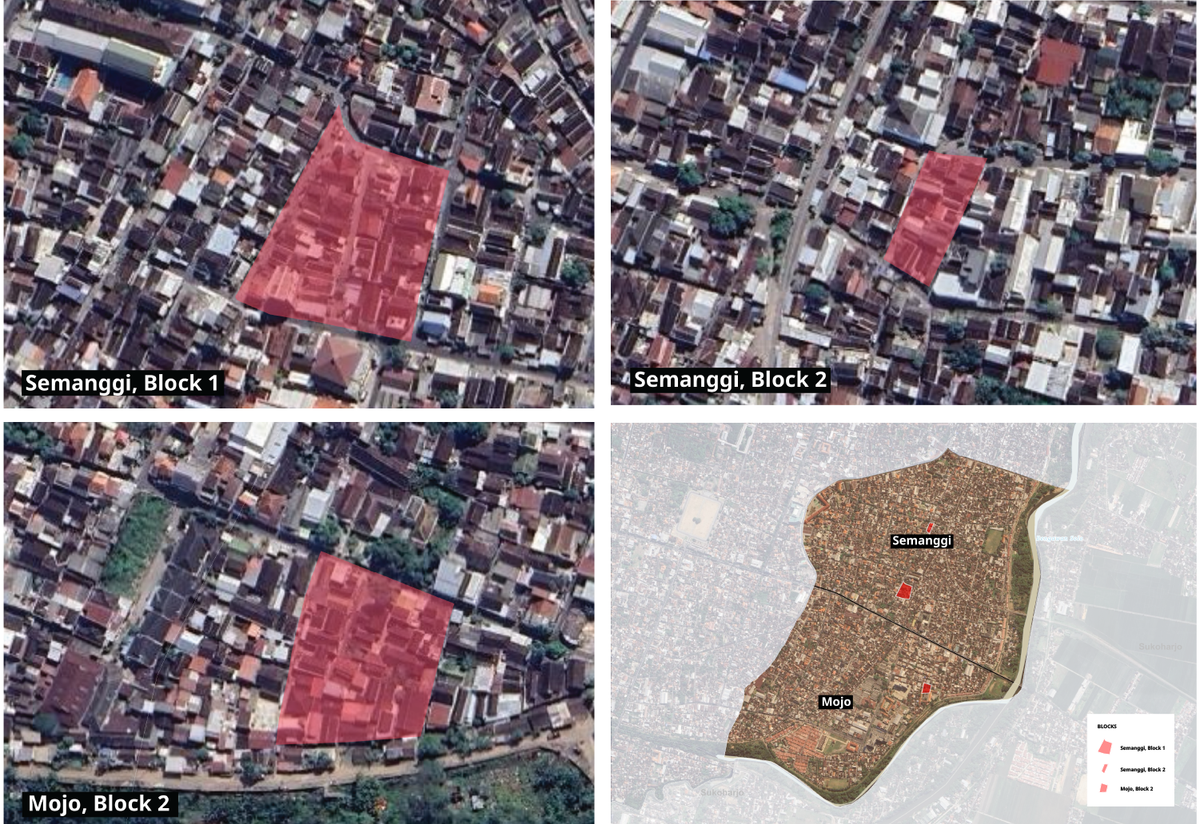
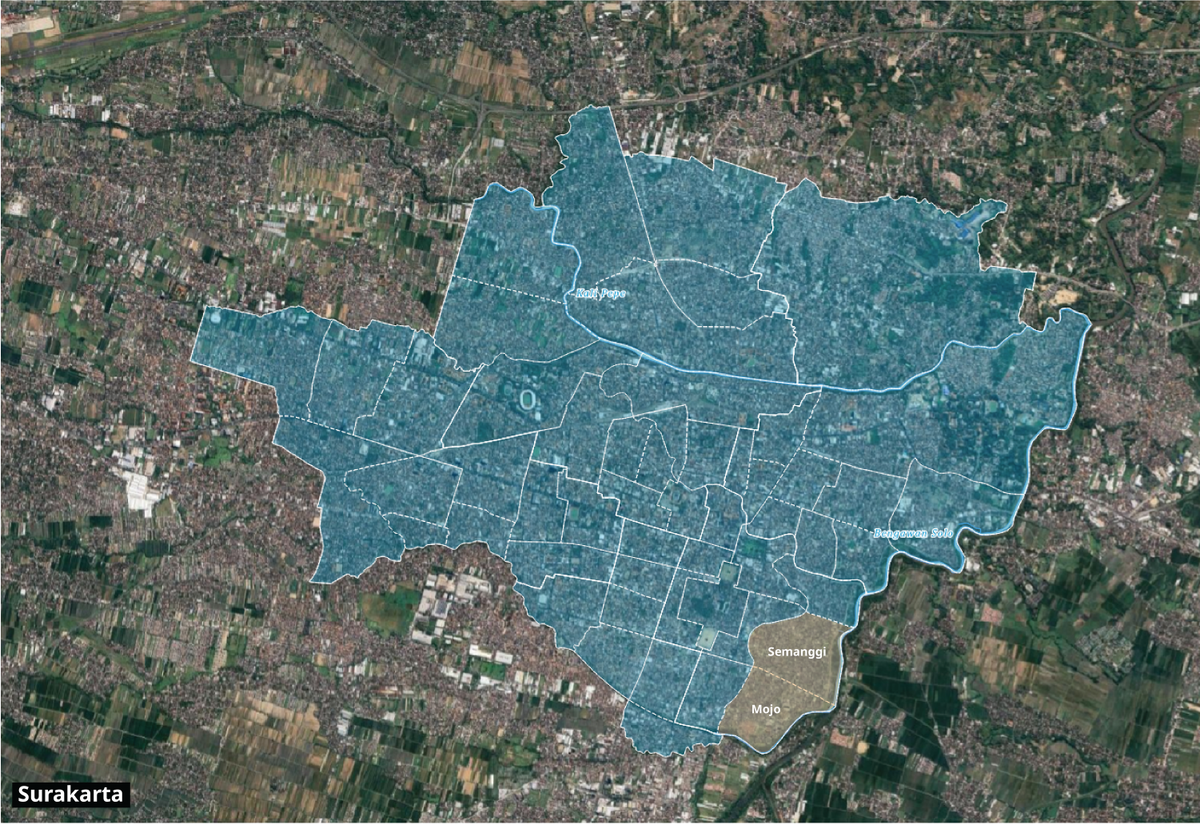
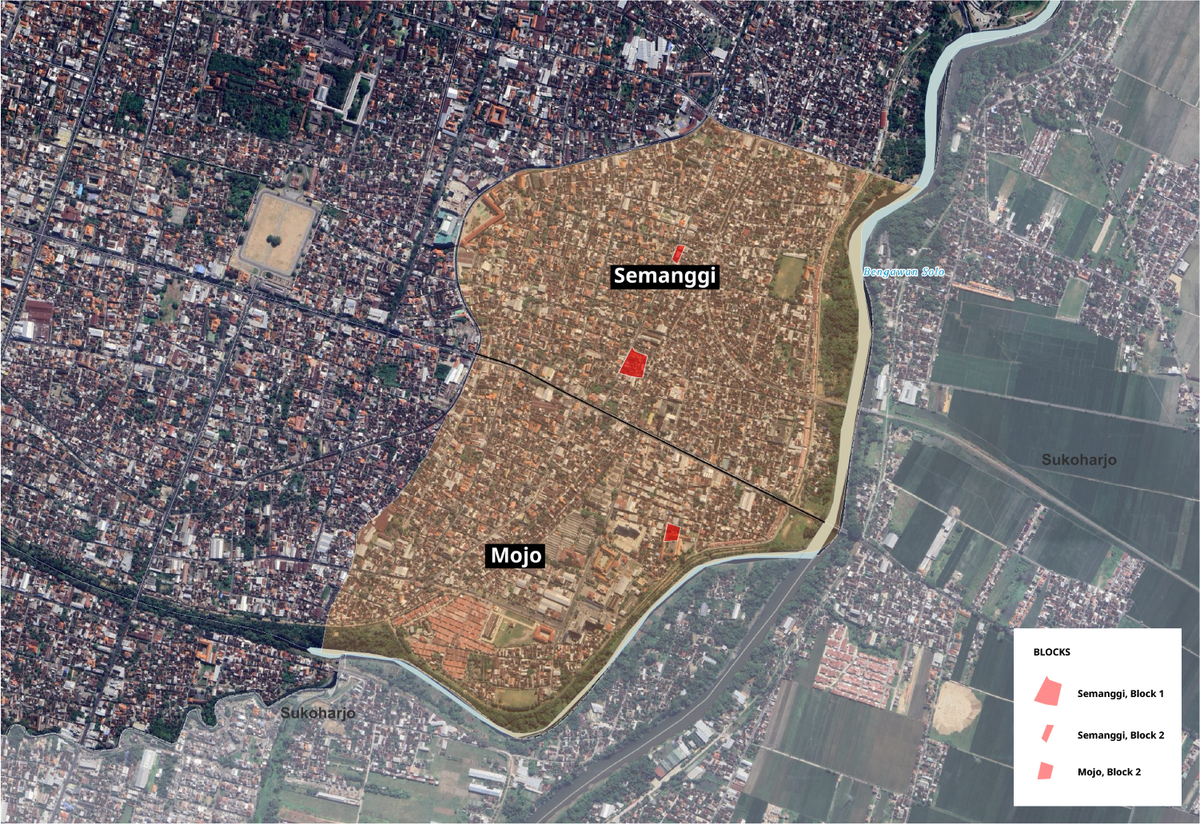
At the meso scale, the study focuses on the urban neighborhoods of Semanggi and Mojo in the Pasarkliwon District, where environmental pressures and social practices intersect most directly. These areas represent dense, incrementally developed urban fabrics shaped by long-term self-built construction and community-based adaptation processes.
Semanggi is one of the most densely populated areas in Surakarta, characterised by tightly packed housing, limited ventilation, and recurring exposure to flooding and water-related challenges. Mojo, established as a separate administrative unit in 2018, reflects a more recent phase of consolidation but shares similar spatial and environmental conditions.
Despite these challenges, both neighborhoods demonstrate strong community organisation and adaptive capacity. Local infrastructure improvements, informal upgrading initiatives, and social networks play a key role in responding to environmental stress. Meso-scale analysis thus highlights how everyday governance, collective action, and spatial proximity shape resilience strategies in highly constrained urban environments.
Satellite imagery ©Google Earth