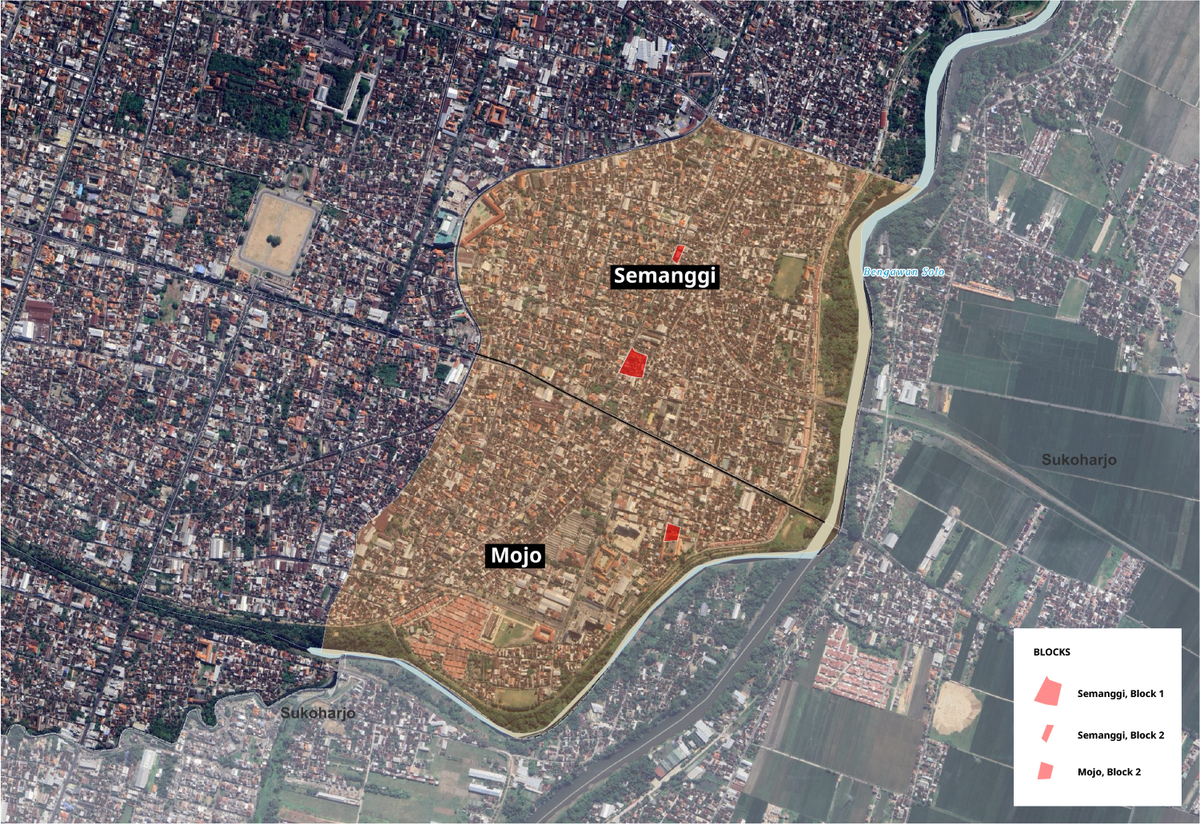
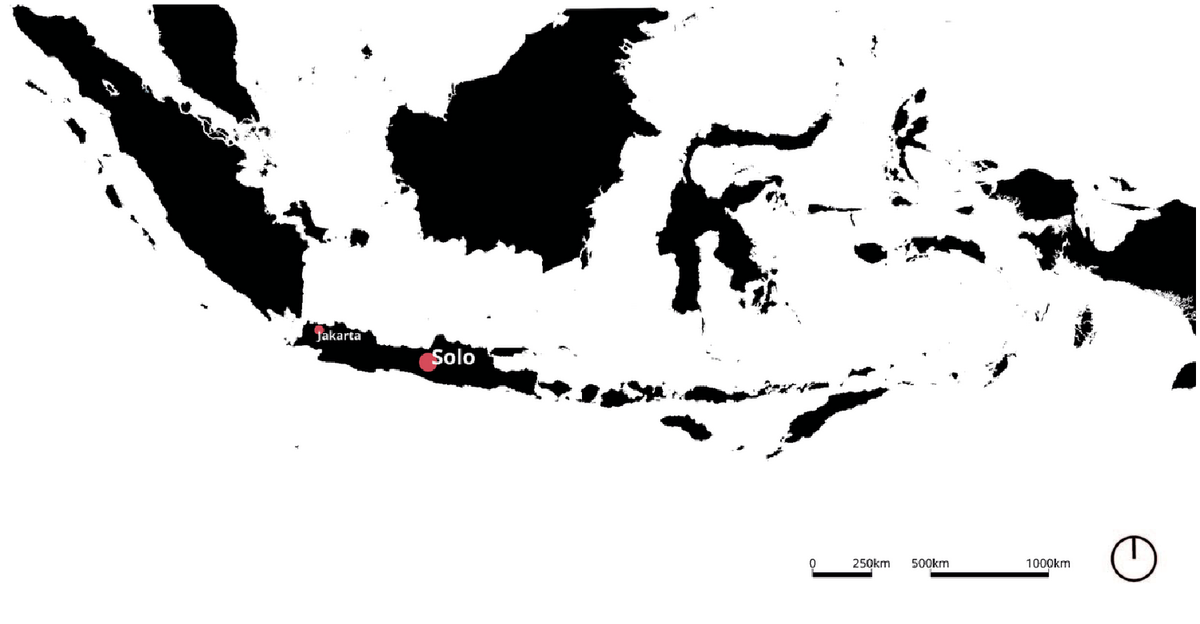
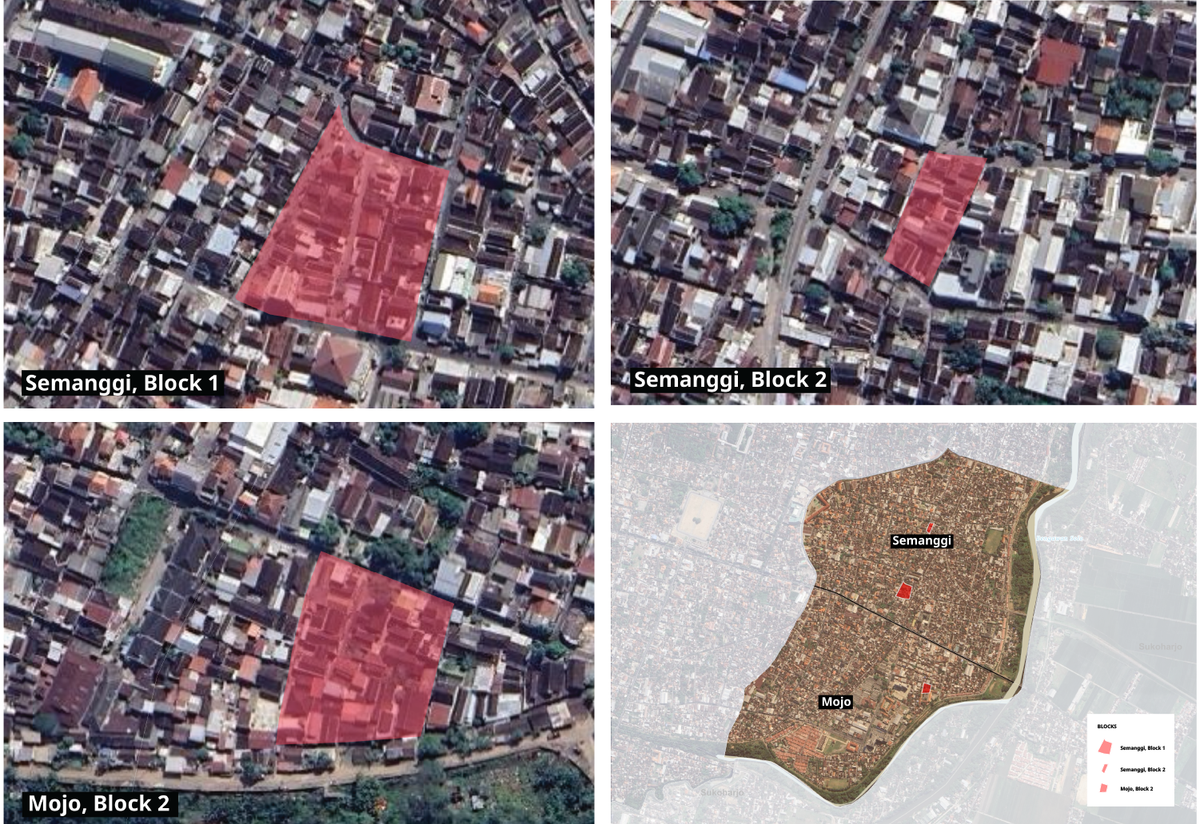
Macro Scale Analysis, Surakarta, Indonesia
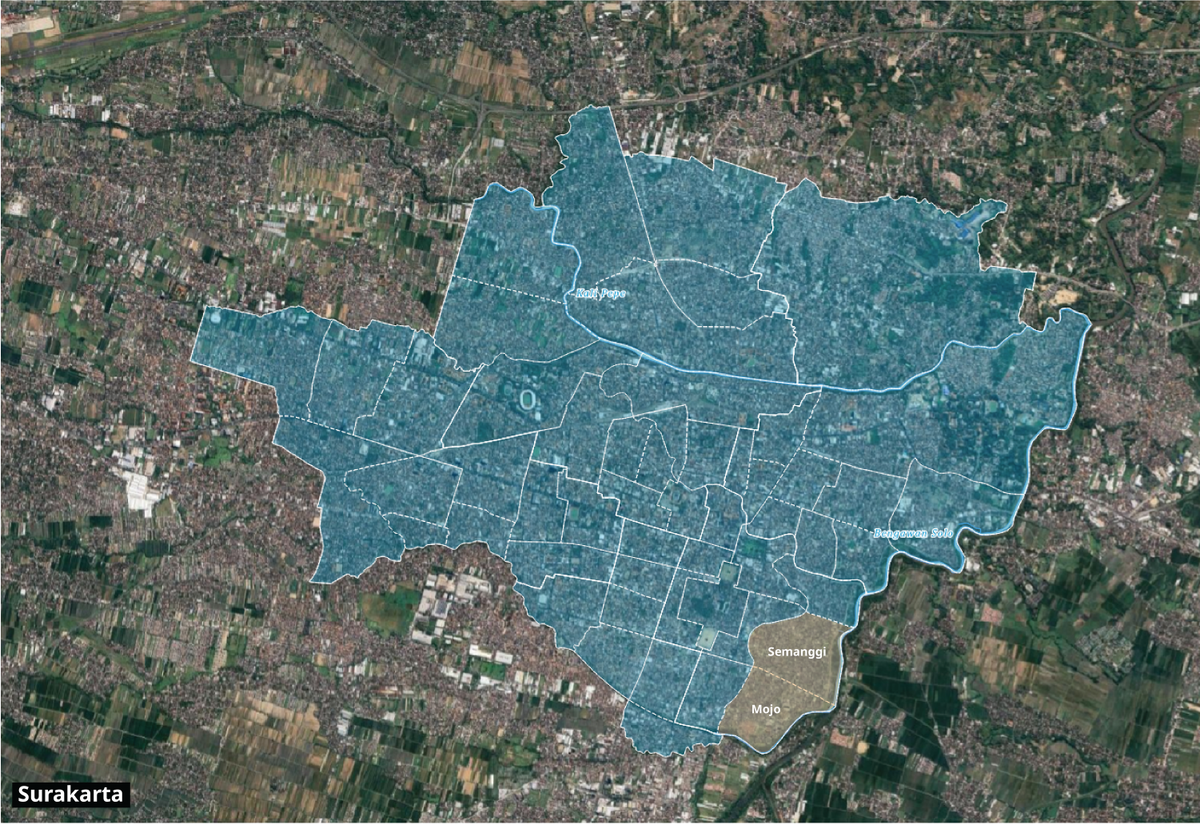
Macro Scale – Solo City: Climate, Urban Growth, and Environmental Risk
Solo (Surakarta) is a rapidly urbanising secondary city in Central Java, Indonesia, where broader regional dynamics strongly shape local environmental conditions. At the macro scale, the city’s development is influenced by its role as a cultural and economic hub within the southern corridor of Java, as well as its integration with surrounding regencies such as Boyolali, Sukoharjo, Karanganyar, Wonogiri, Sragen, and Klaten.
Urban expansion in Solo has intensified land consumption, increased surface sealing, and contributed to rising environmental pressures, particularly in relation to heat accumulation and water management. The city’s inland geographical position further amplifies these challenges, limiting natural cooling mechanisms and restricting water circulation.
Macro-scale analysis focuses on identifying spatial patterns of vulnerability, including Urban Heat Island (UHI) effects, flood-prone zones, and the uneven distribution of infrastructure and housing typologies. These conditions highlight the structural relationship between rapid urbanisation, environmental stress, and the persistence of informal and incremental housing systems across the city.
Satellite imagery ©Google Earth