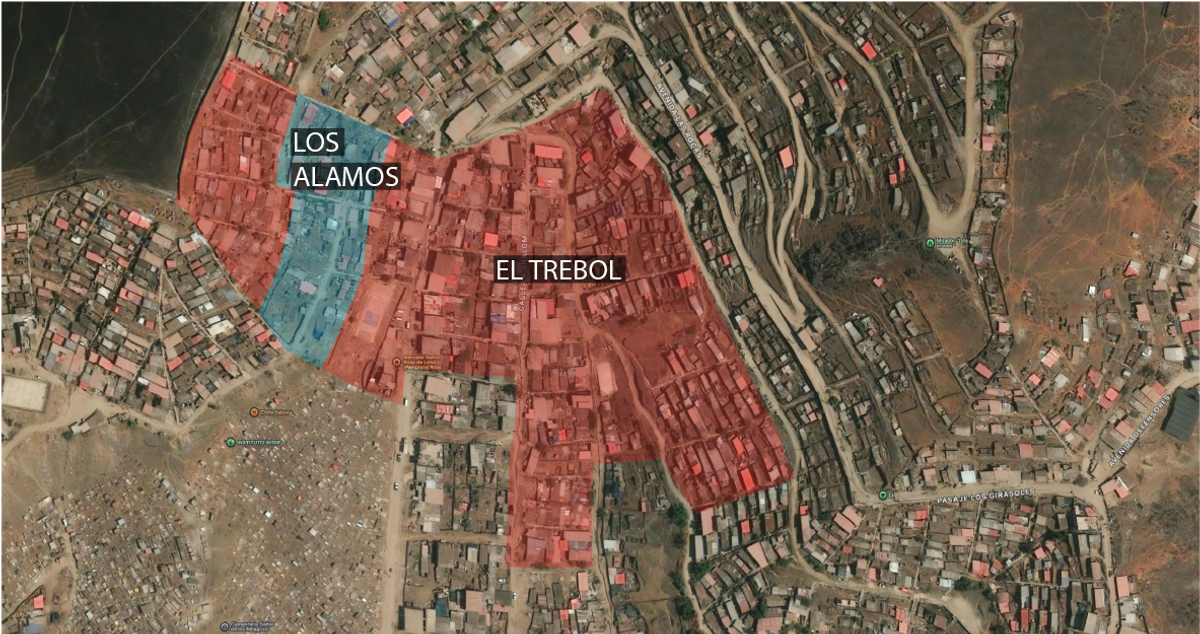
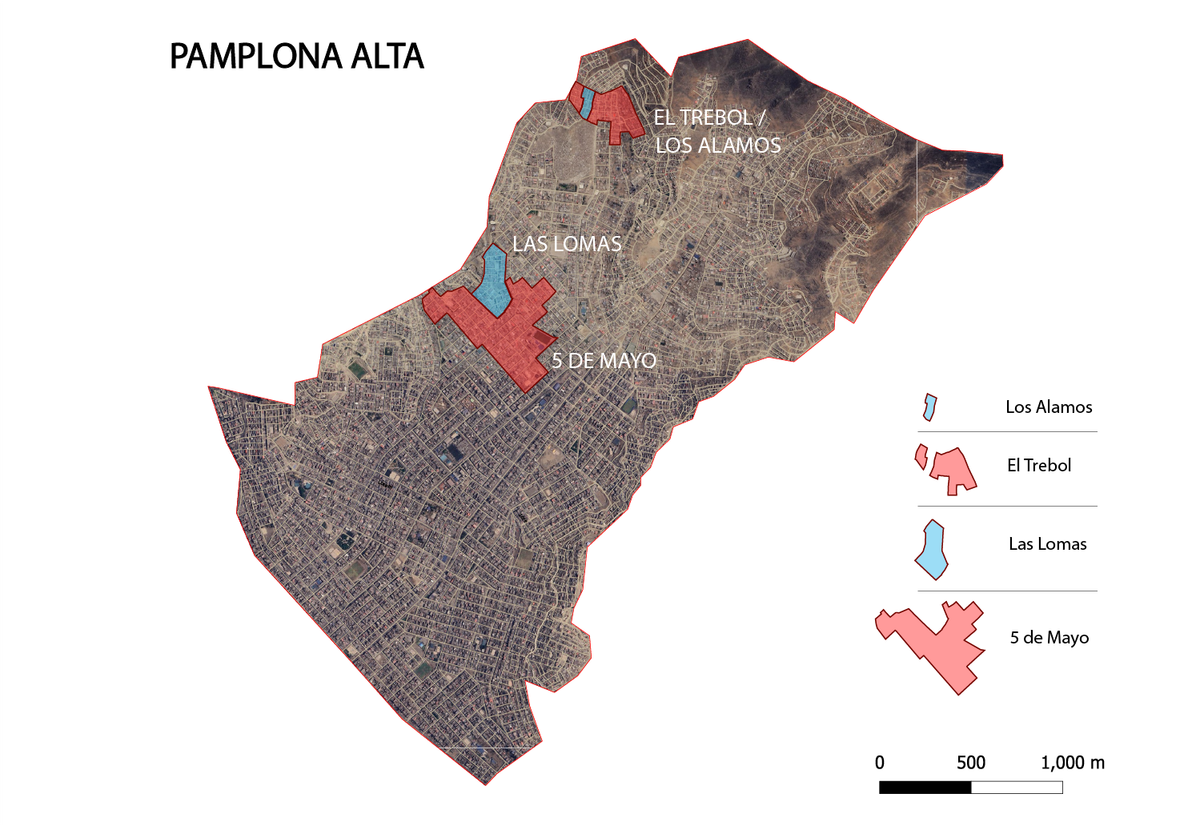
Located in the higher parts of Pamplona Alta, El Trébol / Los Alamos characterized by presenting low consolidations at urban level and mayor conditions of structural vulnerability. There is a predominance of housing typologies C and D, and some transitions from C to B, with the presence of temporary materials y emergencies housing modules.
Access to basic services is limited; a lot of families depend on elevated tanks for water storage and infrastructure built by the own community. The roads are mostly unpaved and in precarious condition. Despite these limitations, there are active processes of progressive transformation, including adaptation and ampliation of emergency modules.
The active presence of the NGO TECHO and their relationship with the community creates favorable conditions for participatory work and the implementation of pilots. Due to its level of vulnerability, its dynamics of progressive growth and institutional support this area. This sector is emerging as a strategic sector for the PSSI case study in Peru.
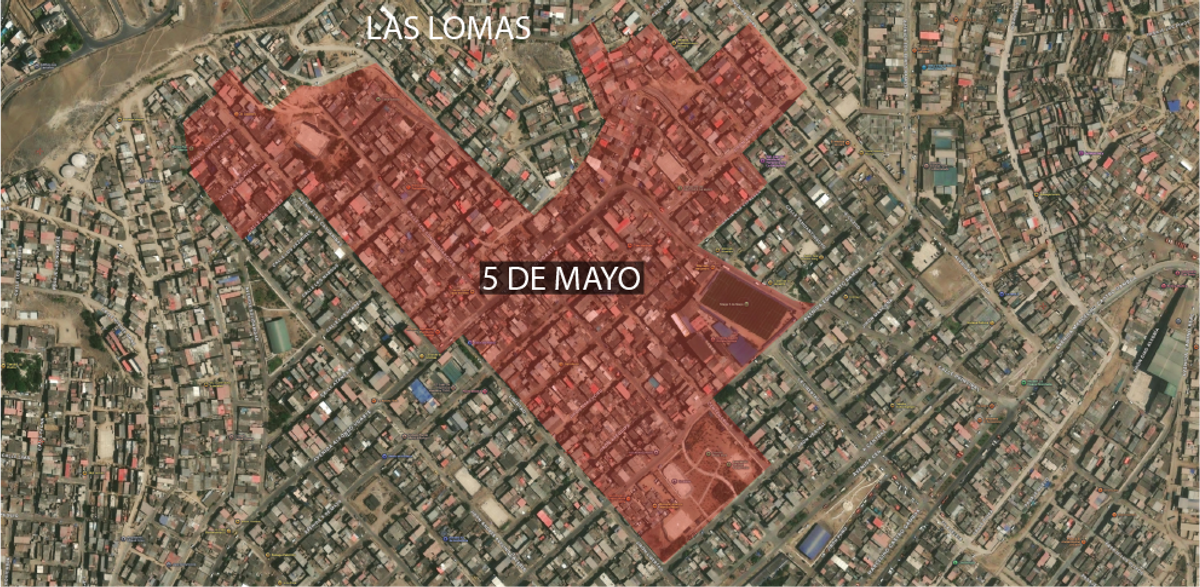
This settlement is located on the middle and upper slopes of Pamplona Alta; it represents a stage of intermediate consolidation in this area. This neighbourhood has been there for approximately 40 years and presents a mix of typologies A, B, and C, with an active construction process of vertical growth.
The houses in this area combine permanent and temporal materials. Even though a big part of the sector has access to basic services such water, electricity and drainage, structural vulnerabilities are observed, especially in homes built on steep slopes. There is evidence of adaptation strategies developed by the community, like the use of little gardens, shaded areas, and progressive improvements in the structure of the houses.
Due to its intermediate level of consolidation and its exposure to seismic risk, 05 de Mayo offers an opportunity to analyze preventive interventions oriented to climate adaptations. Its progressive growth stage allows for the incorporation of improvements in ventilation, thermal comfort, rainwater management, and passive solutions before homes reach critical levels of deterioration or consolidation that are difficult to modify.
The study operates at three interlinked analytical levels, enabling a comprehensive understanding of climate-responsive housing processes:
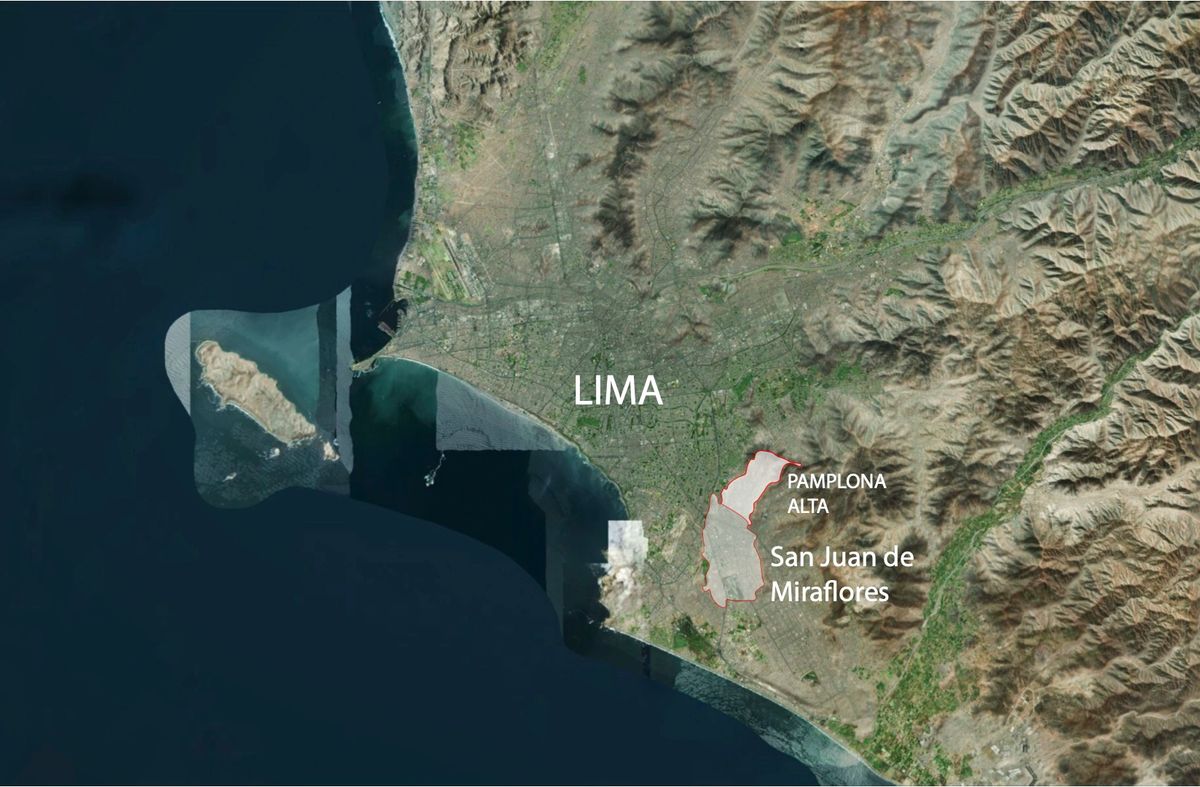
1) Macro Scale – San Juan de Miraflores (Metropolitan Lima)
Analysis of city-wide patterns of urban growth, environmental risks, and housing typologies. This includes mapping vulnerability to seismic activities, infrastructure deficit, environmental pressures that shape housing conditions and socio-spatial distributions of self-built settlements.
2) Meso Scale – Pamplona Alta
The focus narrows to Pamplona Alta, a hillside sector of San Juan de Miraflores characterized by progressive consolidation and complex topography. Investigation of social and spatial dynamics within the selected area. This includes community infrastructure mapping, participatory observations, and assessments of social networks and adaptation practices.
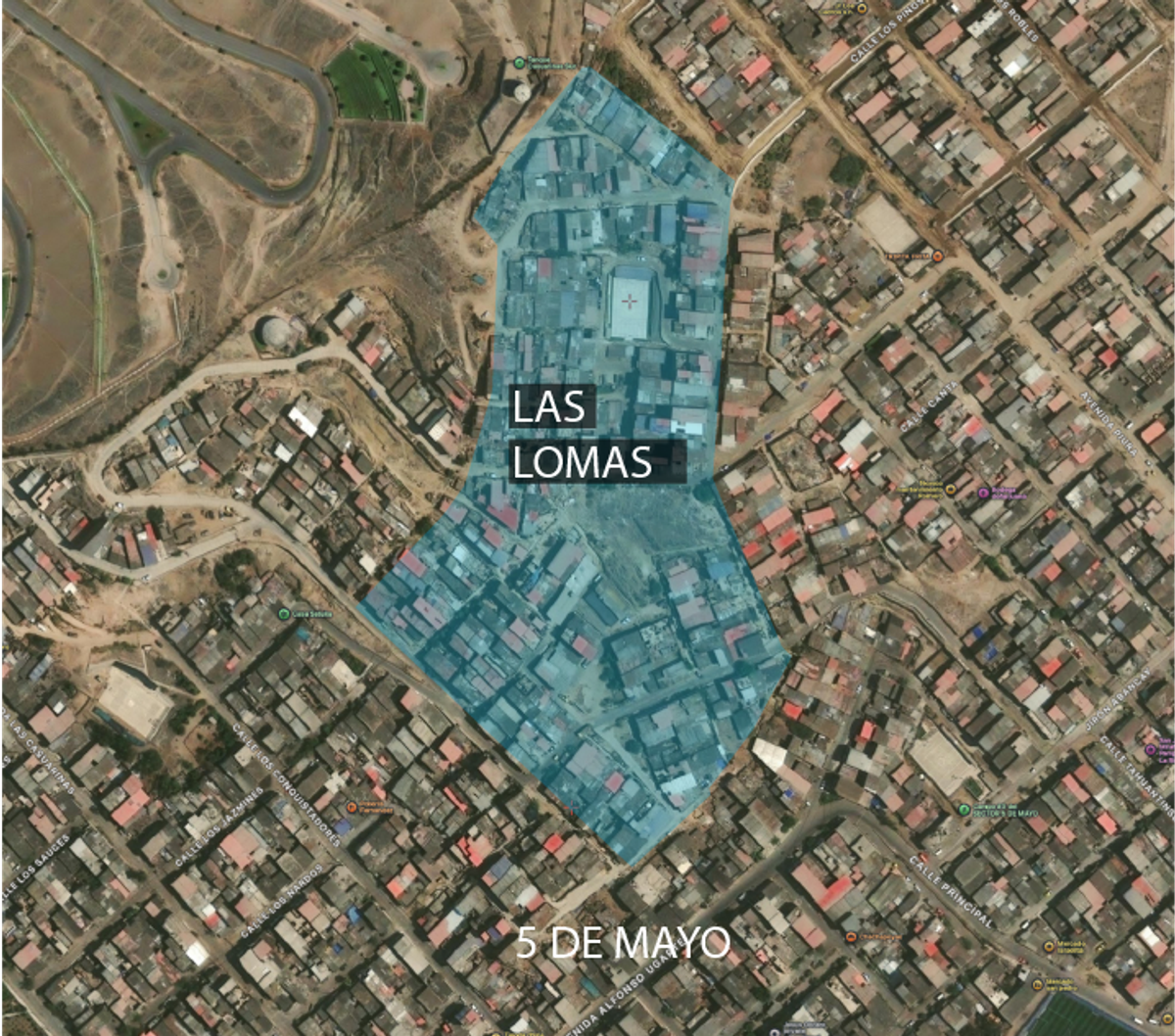
3) Micro Scale – Housing Inventories in El Trébol, Los Álamos and 5 de Mayo
Detailed house-level surveys and inventories within the three case-study areas documenting construction materials, ventilation, shading, and water management. The focus is on identifying incremental adaptations and local design logics that respond to climatic challenges.