Everyday Adaptations, Solo, Indonesia
Overview
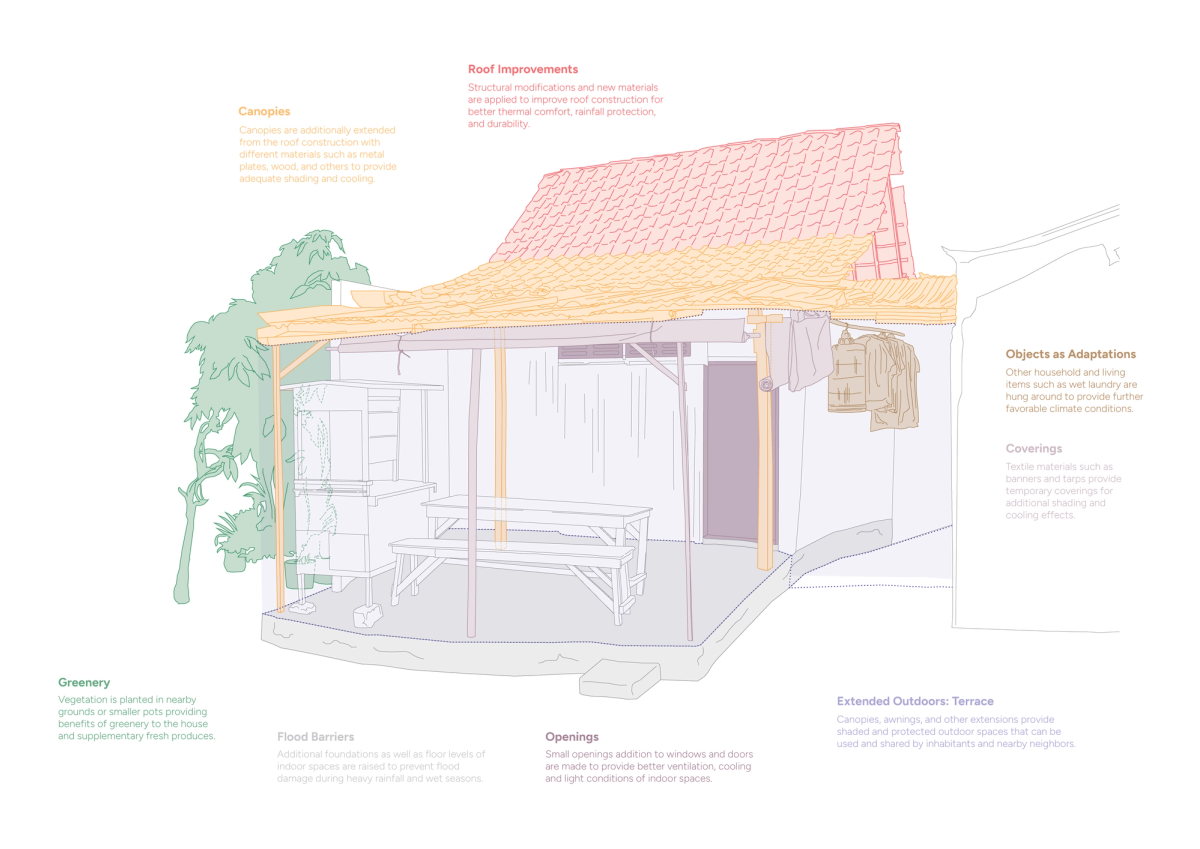
This diagram illustrates a representative self-built home model, highlighting color-coded passive strategies developed by families to adapt to difficult environmental and geographical conditions.
Climate Protection & Envelope Adaptations
This region experiences periods of intense heat, heavy rainfall, high humidity, and flooding. Many houses respond to these conditions through incremental, low-cost modifications to the building envelope, often combining shading, ventilation, rain protection, and material changes to improve comfort.
- Canopies & Awnings: Overhead extensions that provide shade and shelter from intense sunlight and heavy rain. They help create cooler, protected outdoor areas while reducing direct heat gain to the house. These include awnings, carports, roof extensions, and other lightweight covered structures.
- Ventilation Openings: Windows, doors, vents, and wall openings that facilitate airflow and improve natural ventilation. Openings may be added, enlarged, relocated, or modified to release warm air, increase air movement, and improve daylight while responding to local weather conditions.
- Coverings of Openings: Temporary or permanent materials used to protect doors, windows, verandas, and other openings from intense sunlight, wind-driven rain, and heat. Common solutions include banners, fabric sheets, blinds, wooden panels, and metal sheets, often adapted according to immediate needs.
- Roof Improvements: Incremental modifications to roof structures or materials that improve protection from heat and heavy rainfall. These may include changes to roof height, roofing materials, or additional layers that reduce heat gain, prevent leakage, improve durability, and respond to changing weather conditions.
Flood Protection
Flooding can occur during periods of heavy rainfall, particularly where houses sit at a lower level than surrounding roads or plots. Residents often make incremental changes to raise, block, or redirect water away from the living areas.
- Flood Barriers: Permanent or semi-permanent modifications that prevent floodwater from entering the house. These include raised entrances, elevated terraces or courtyards, increased floor levels, steps, parapets, and low boundary walls.
Vegetation & Outdoor Living
Vegetation and semi-outdoor spaces play an important role in creating cooler, shaded transition zones around the house. These spaces can provide relief from heat while also supporting everyday social and domestic activities.
- Greenery & Microclimate: Trees, shrubs, vines, gardens, grass, and potted plants introduced around or on the house to create shade, reduce heat exposure, improve air movement, and support drainage. Beyond their physical cooling effects, greenery can also create a visually cooler and more comfortable environment.
- Extended Terraces: Covered or semi-covered spaces at the front of the house that act as a buffer between the street and the interior. They provide additional living space while offering shade from intense sunlight, protection from rain, and a cooler outdoor area for socialising and everyday activities.